Podcast: Play in new window | Download
Adeline Engelstad | Episode 1196


SPONSORS
 You can help support the show!
 GRPotteryForms.com


Number 1 brand in America for a reason. Skutt.com

For all your ceramic needs go to Georgies.com
What is the biggest challenge you face with working with porcelain?
I think it is the moisture control. It is not necessarily that you can’t test for moisture, but it is being mindful that you have it when you need it and it is not there otherwise. So I use a lot of brushes and sponges and am mindful of that moisture so that I don’t lose time working with the clay. That is probably the biggest one.

What so you think most potters misunderstand about porcelain?
I wouldn’t say throw everything you know about clay, but I think people assume it is going to act like other clay bodies. I would just say, challenge your assumptions about it. I think centering it is very easy, but other things can be a challenge. So what is challenging in other clays is not necessarily challenging in porcelain.
How long did it take for you to feel confident in working with porcelain?
Probably a good six months. I am not suggesting that anyone commits to that level, but when I really got comfortable working with it, I stopped throwing other clay so I could really build some porcelain building muscle memory instead of having to have my brain and hands toggle between working in the weirdness of porcelain and then having to readjust back to a stoneware. I would say if you want to try porcelain, just really commit to it and treat it like snowboarding in that you may fall and fall and fall and fall and then it clicks. I can’t imagine trying to learn to ski and to snowboard at the same time.
It sounds like it took you six months to really feel comfortable, but what mistakes taught you the most?
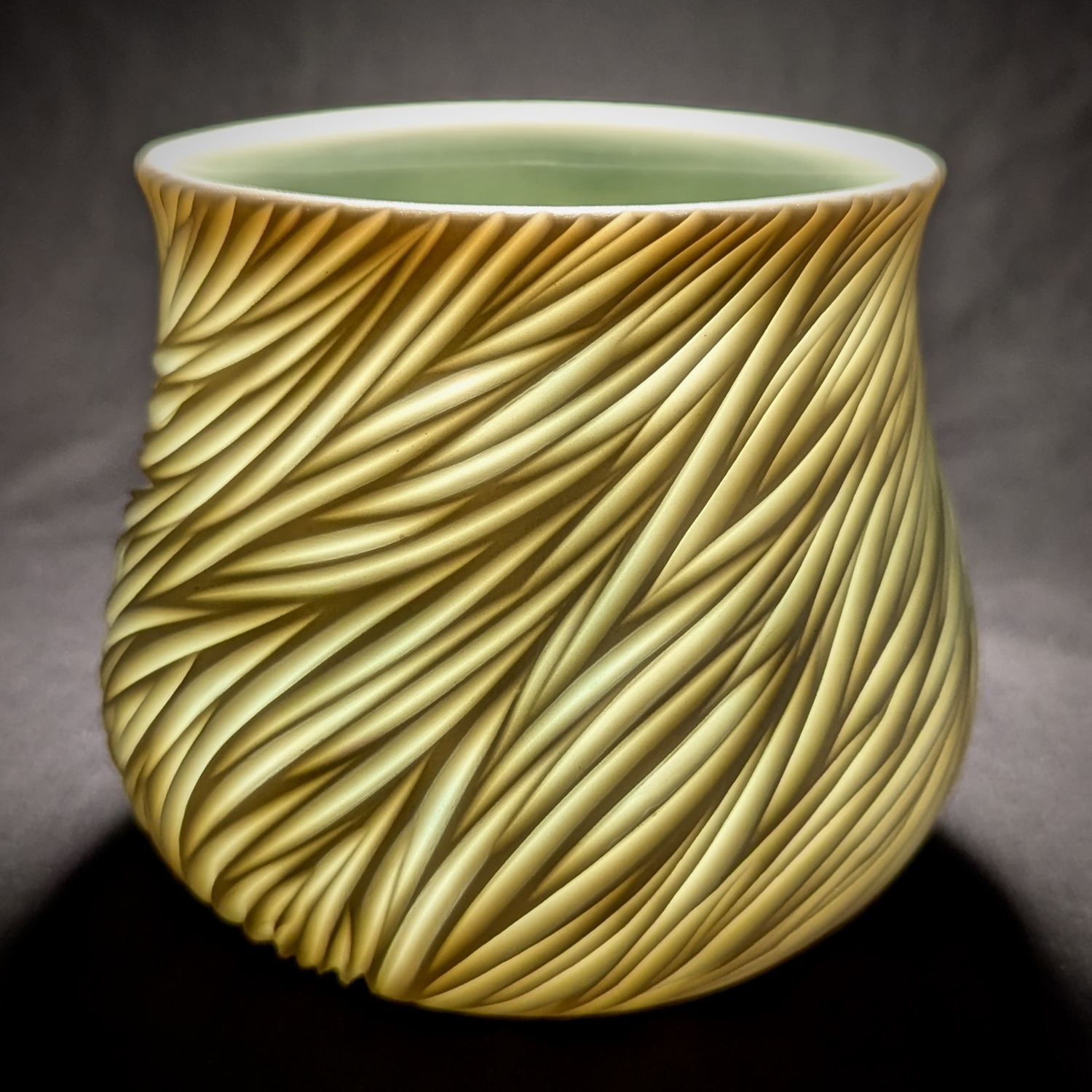
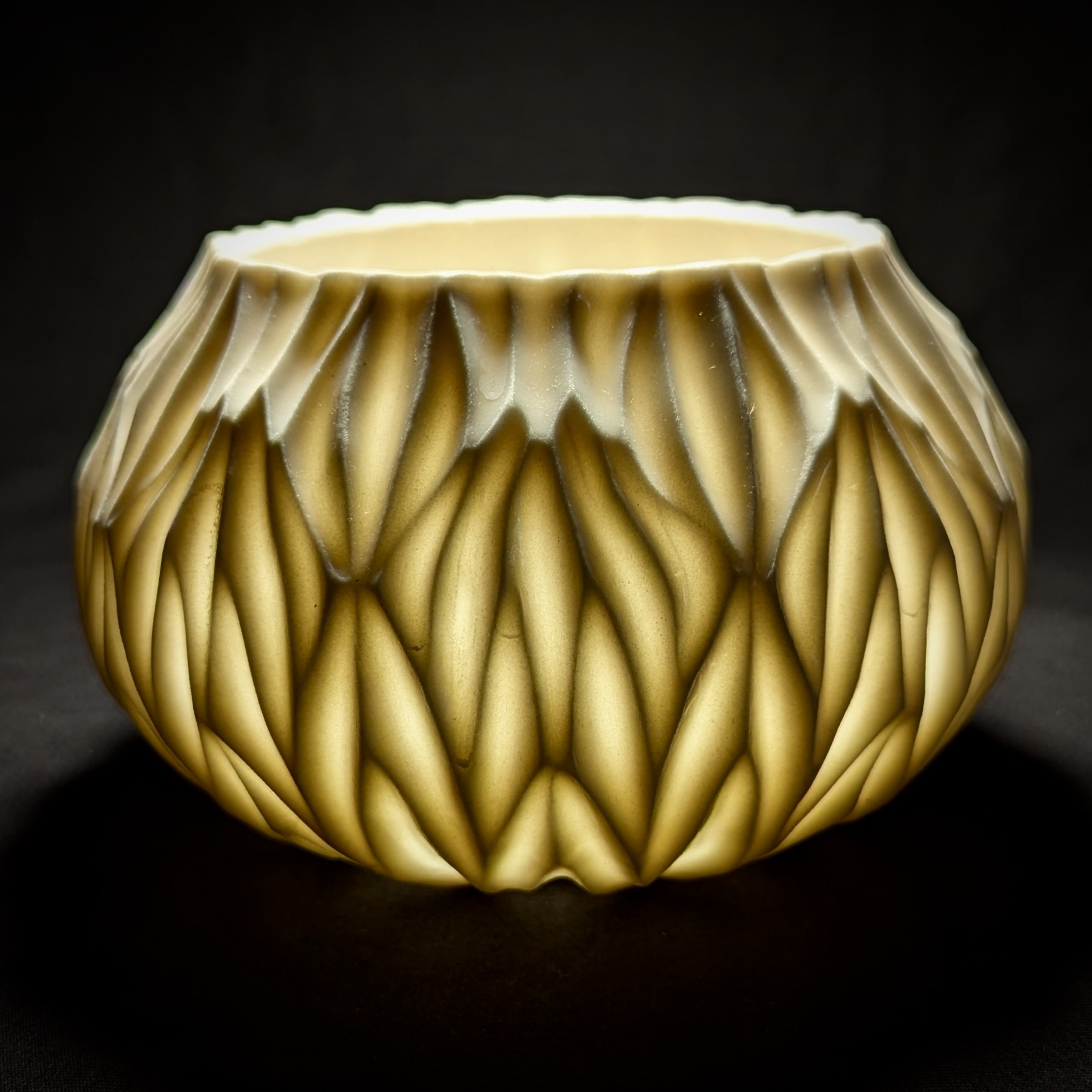
Learning why porcelain wants to crack or warp. So just paying attention of when it comes out of the firing, what happens to that piece as it was made. I think one of the big mistakes I made was assuming the compression was really needed in porcelain, and I don’t know that that necessarily is. I think that consistent wall depths even before carving is far more important for a piece as it dries.
So are you saying that drying porcelain slowly is important?
That’s a great question. I don’t think it is unless you have really done a lot of patching or attachments. I do use damp boxes, but more to keep the consistency between each piece the same so I know that they are all the same softness or same spectrum of leather hard. I actually, when I am done carving, I just set them out and let them air dry in Colorado air.

If porcelain had a personality, what would it be?
Oh, man! It would still be kind of like a hot-house orchid. I feel like it is fussy, but I think it would be tougher than everyone expects, but has very specific needs. She’s a tough girl.

Book

The Song of Achilles by Madeline Miller
Contact
Instagram: @ajeceramics