Podcast: Play in new window | Download
Karyn Gabriel | Episode 1239
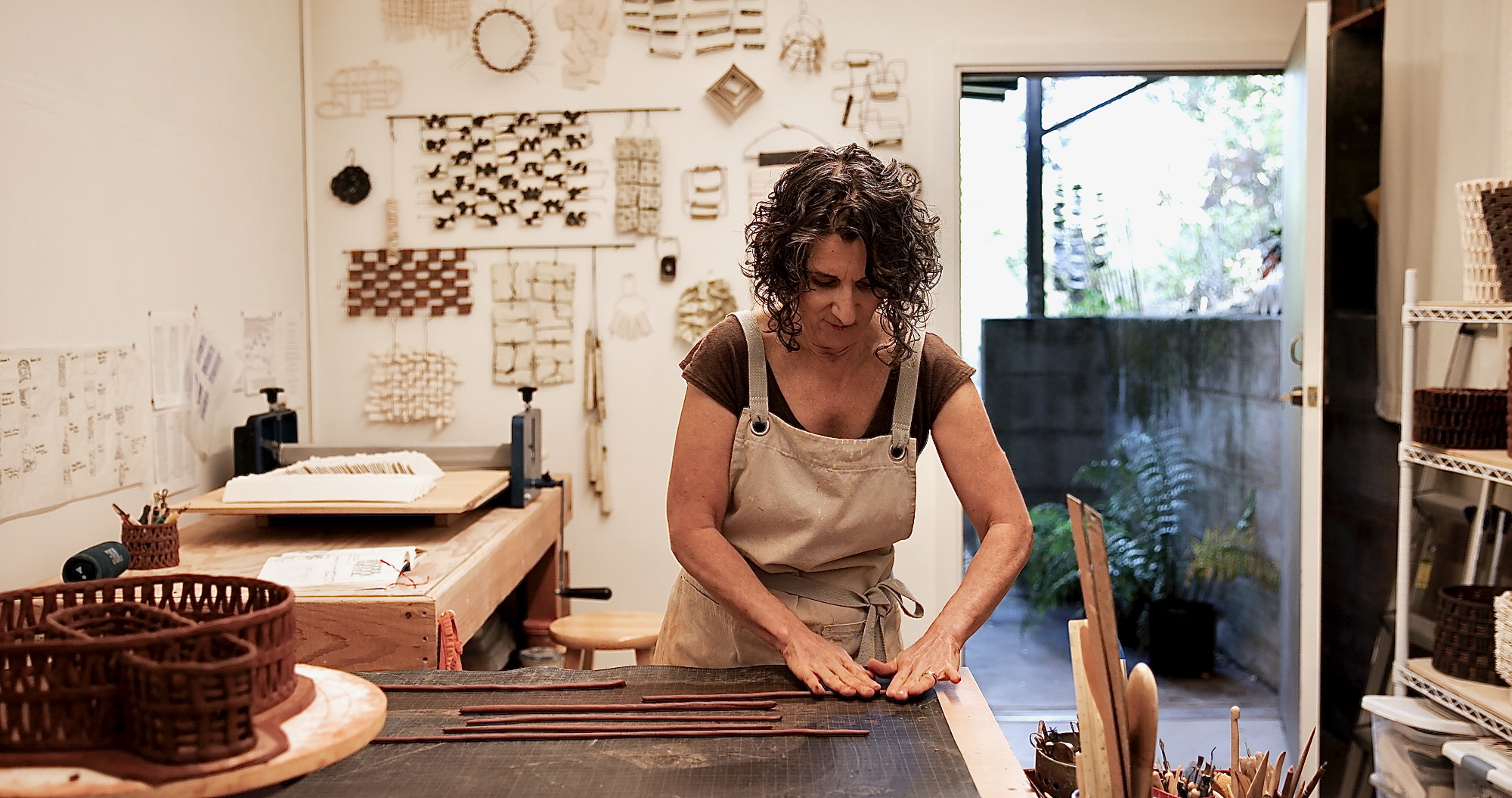
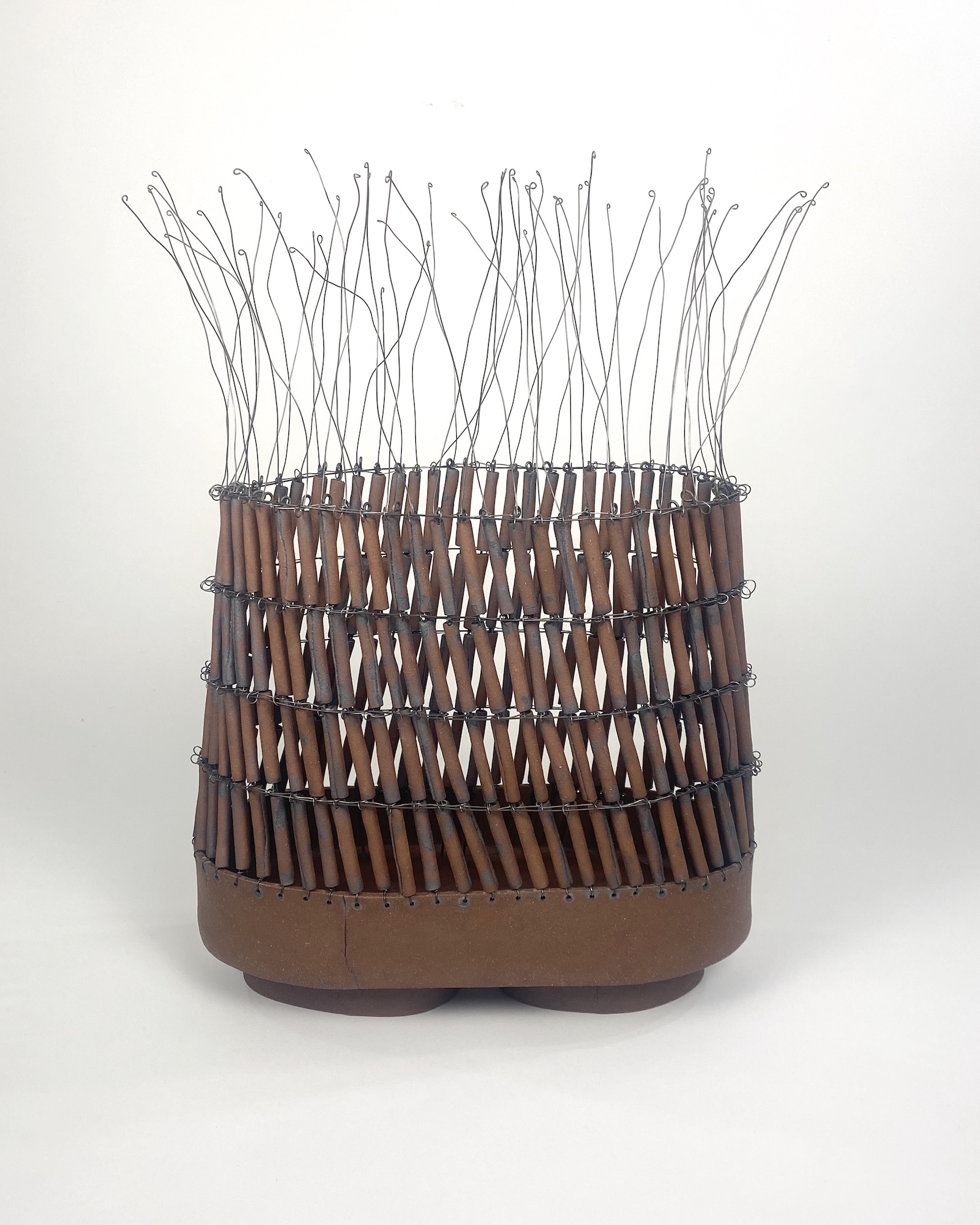
Karyn Gabriel is a San Francisco Bay Area artist with a BFA from the University of Michigan and post-baccalaureate studies in ceramics at Oregon College of Art and Craft. Grounded in pattern as a visual language, Karyn’s sculptures are inspired by structural references from architecture to textile construction. Pared down, elemental forms expose a slightly brutal beauty while emphasizing the interplay between surface and structure.
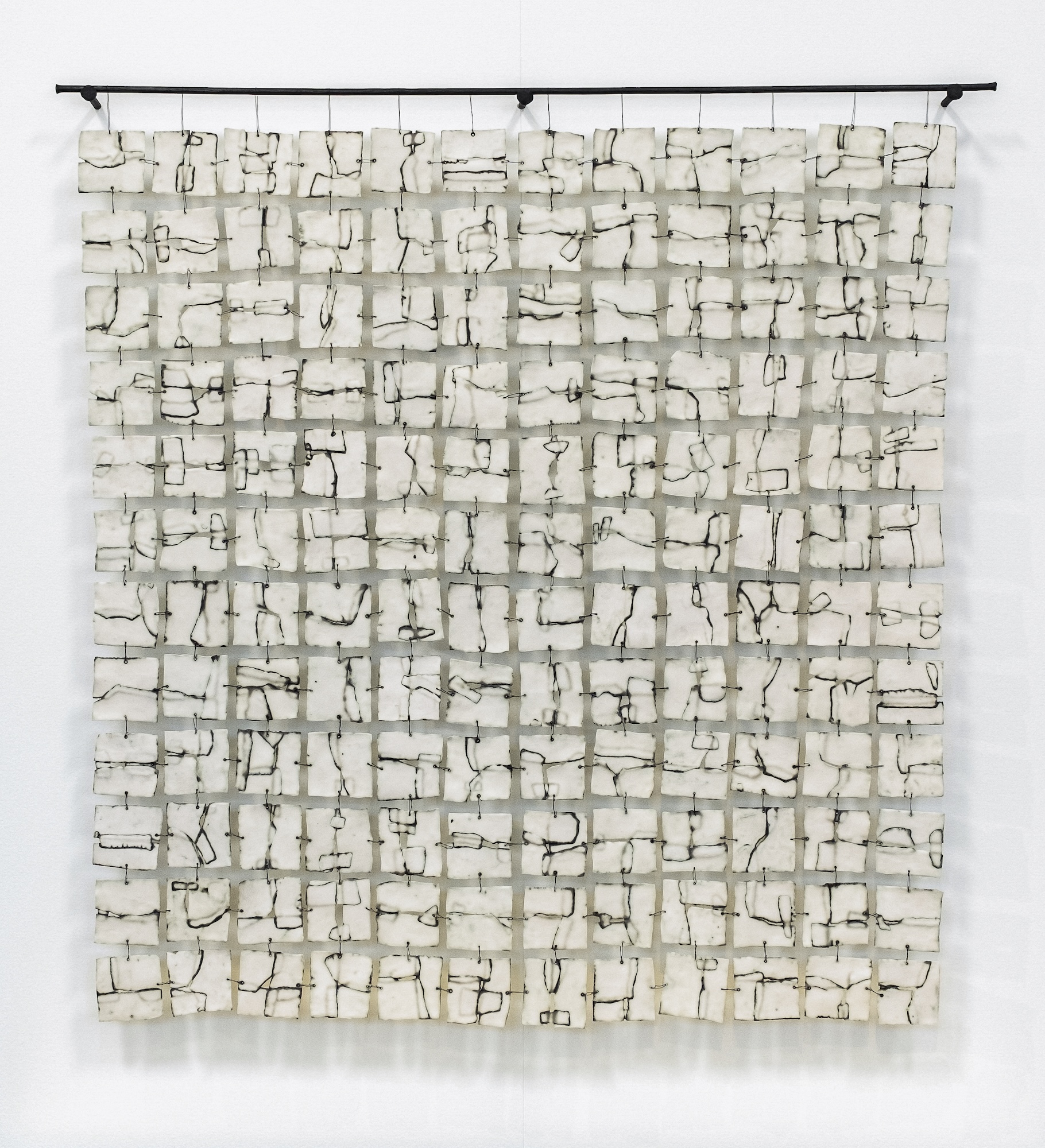
Photographs by John Janca
Clay Call
 Lets hear from YOU! Click HERE.
SPONSORS
 You can help support the show!
 GRPotteryForms.com


Number 1 brand in America for a reason. Skutt.com

For all your ceramic needs go to Georgies.com

Do you have something like that in your studio that it’s a “mistake” that you find yourself repeating from time to time.
I think I find myself, sometimes I back myself into a corner by making too complicated of a detail that I can’t get my fingers in like to push something together. Things like that.

What are you doing right now that’s got you super excited that you’re looking forward to get back in the studio to chase down?
I am just about to start a new testing, some new testing in terms of some constructions. created back in January when I was on a residency. So I’m going to take some of those and kind of make them larger.

Do you have things in the studio that you tend to drag your feet on? Like for me, I tend to postpone glazing.
Well, you notice I don’t use any glazes. So I definitely postpone, I think surfacing, My work is not about the actual surface. It’s more about the integral construction. So it works that I don’t do a lot of surface work. I use oxide sometimes and that’s sufficient. But a part of my work is all about the fact that I don’t have to use glazes. It’s funny you mentioned that because I don’t have an affinity to surface treatments in those ways. So I do avoid that.

Your work is so quiet and subdued. Have you ever, have you ever tried to step out of that box and done loud work, bright work?
Well, the idea of starting to use some color has been sitting with me for the last six, seven months. So I think I am going to be using color in the future. I. feel like it will probably be color within the wheelhouse what I’m comfortable with, but the fact it might not be an earth tone would be pushing me out of my current boundaries. So integral color into the clay body. It’s really important for me that it’s integral as opposed to surface treatment. That just goes back to a philosophical way that I like to approach. almost anything. I saw it in my architecture world. I see it here. I just really feel like it’s not decorate, you know, like there’s this idea of decoration on top of something. And I… not for other people’s work at all, but for my work, I need it to feel more integral. So maybe there’s a way I do that as I develop it that it’s not necessarily like intricately colored clay or something to that nature, but I need to explore. So I see that coming. I feel it coming, I should say.

Your work that have necessarily an overt message or idea behind it, but what do you as an artist hope someone will feel when they interact with your work?
I really want people to be curious and I want people to quiet themselves and kind of wonder. And so I want them to feel present with the work. And I think that there is a very subtle, my work is so abstract, but there is a subtle, subtle conceptual idea behind it, which is, you know, relating to how I see what I see outside in the world. And that is that everything has an underlying structure to it, but we don’t really see that because it’s buried on like, just like our body, our skin is covering the skeletal aspect of our bodies. The way in the desert, like a cactus has this like, incredible thorny, thorny skin. But when you take that off, there’s like an amazing skeletal structure filled with holes that allows it to have to hold the water. We don’t see that quiet. So like my work is about pulling back the surface to express that underlying rawness of the world of an object, of a building, whatever the case. So, but that’s not where, that’s like, for me, that is my intent. But people can bring to it what they want to the work. And I think it’s an open-ended, when something is about an abstraction, it allows other people to bring their own interpretation. And I feel that completely fine.

What makes you decide if a piece is worth leaving your studio?
It’s kind of a gut thing. Because I actually have a number of pieces now that are not leaving the studio. So it just doesn’t, there’s something that doesn’t resonate. It’s not feeling, it’s not pushing. It’s not, it’s not, I’m not curious about it. just is, it just kind of doesn’t resonate. doesn’t have a strong point of view. That makes sense. It feels a little one note. It’s that’s it’s a hard it’s really a hard it’s a hard thing to put into words because I really just feel like all the work that I put out there is is an expression of me. So I need to feel really, really good about what goes out in the world because I, you know, for better or worse, you’re going to think something about who I am by the work that I choose to put out in the world. And so I really feel like something has to sing. And if it doesn’t sing, then I don’t feel like I hit the mark.


Book

Ninth Street Women by Mary Gabriel
Contact
Instagram: @kgabrielstudio