Podcast: Play in new window | Download
Chris Bramble | Episode 1267
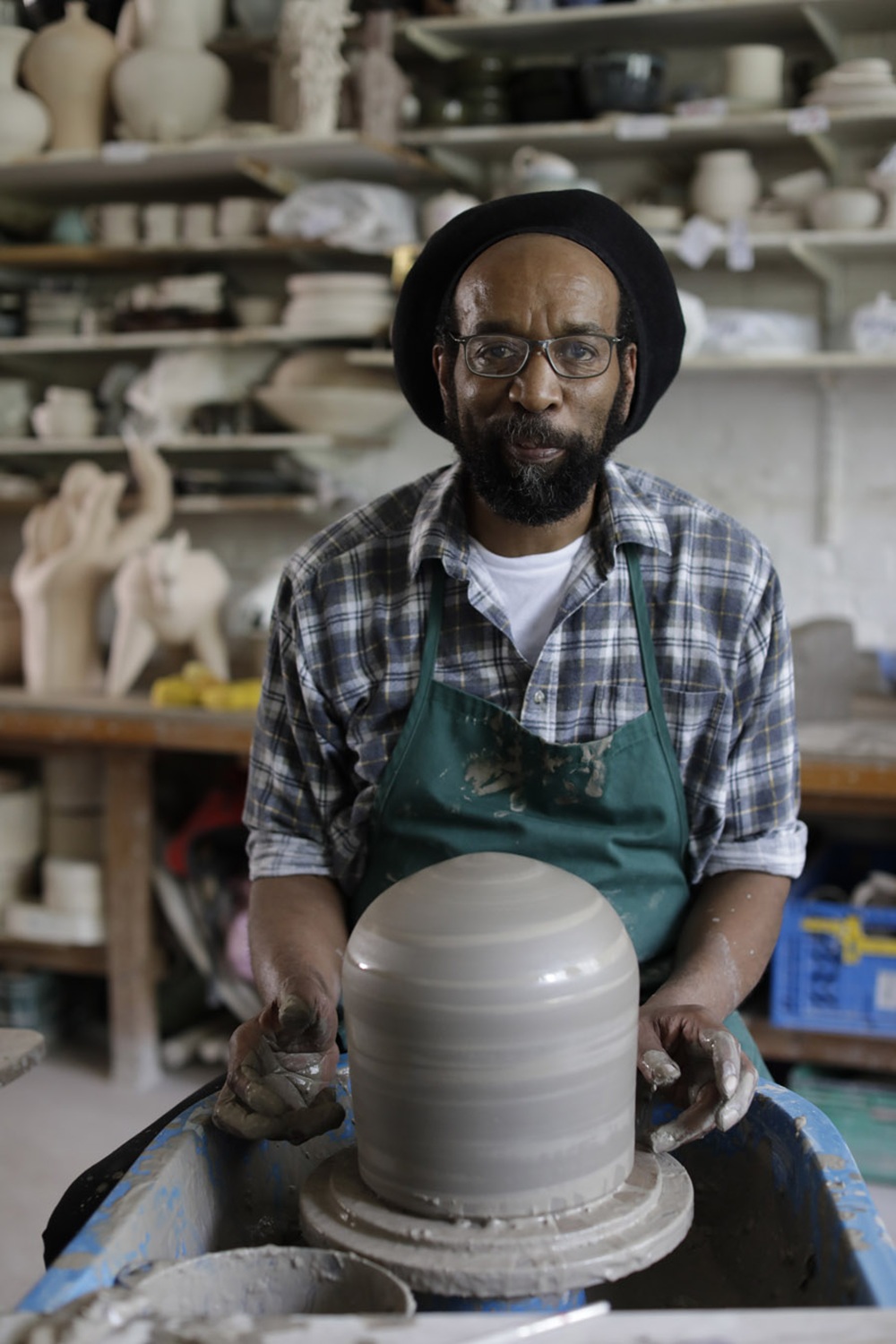
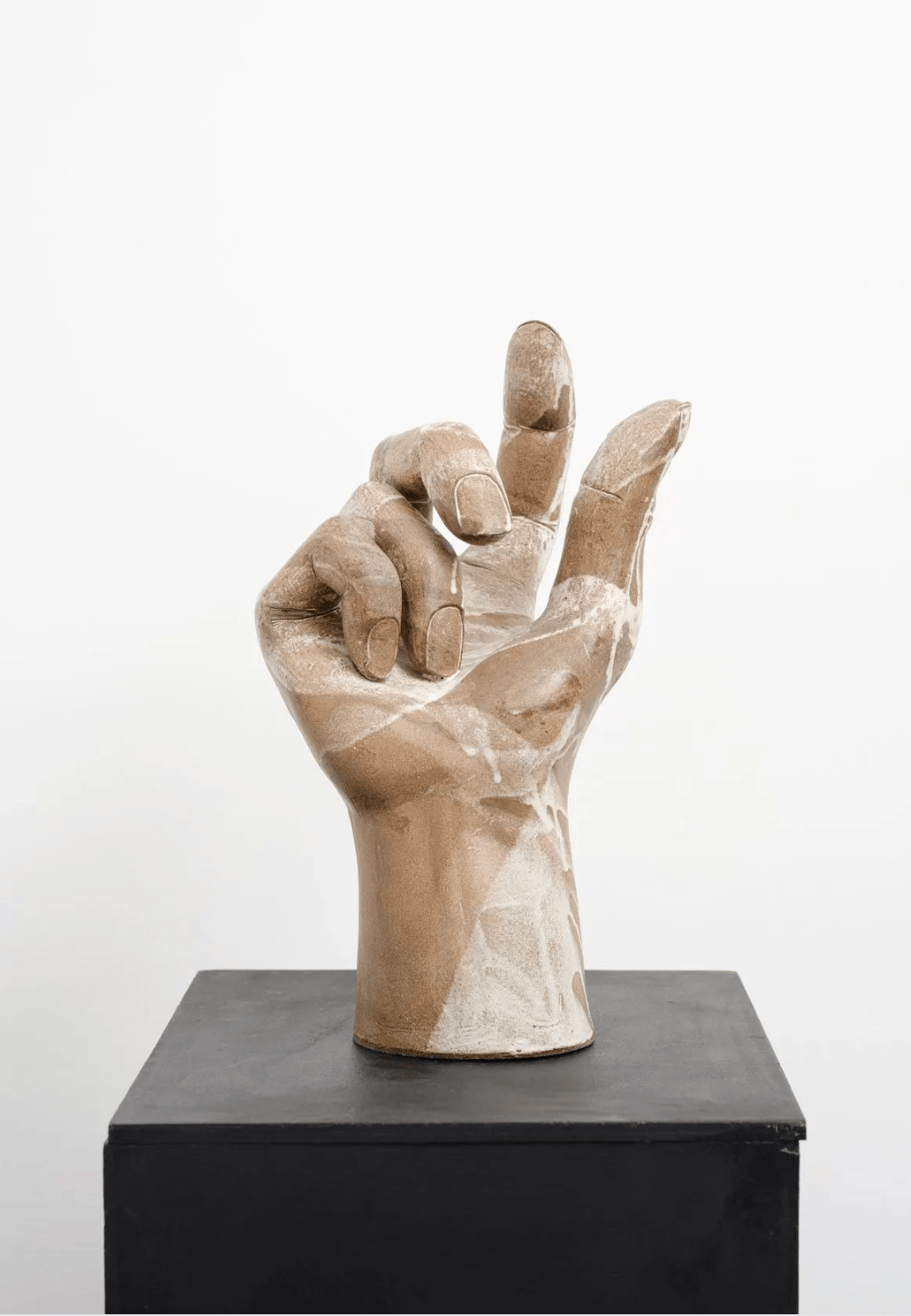
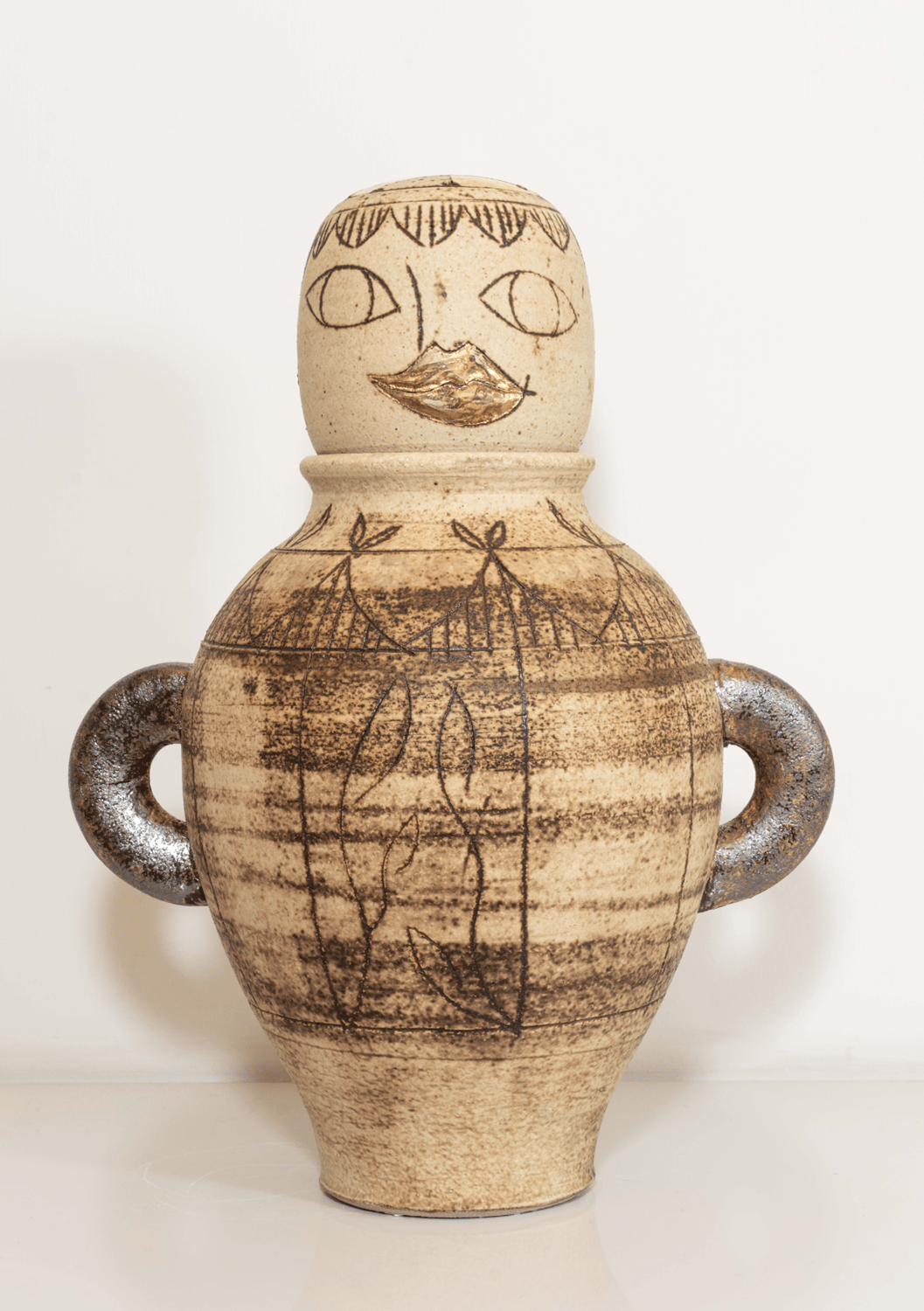
Chris Bramble is a London-born ceramic artist whose distinctive contemporary style seamlessly blends his African heritage with European influences, developed over nearly four decades of practice since establishing his studio in 1988. Chris is a graduate of The Glasgow School of Art with a master’s from Westminster University. Chris’ work draws from his transformative period in Zimbabwe during the 1980s, where he studied traditional stone carving techniques that profoundly shaped his approach to clay. Chris’ ceramic sculptures, inspired by life, rhythm, and dance, captures the spirit and hidden aspects of contemporary Black culture through organic forms that merge African aesthetics with modern techniques. Chris works are represented by international museums and galleries worldwide and have been featured in numerous publications and editorial campaigns. Chris continues to nurture the next generation of ceramic artists through his London studio, where he teaches and shares the craft of clay.


Clay Call
 Lets hear from YOU! Click HERE.
SPONSORS
 You can help support the show!
 GRPotteryForms.com

Number 1 brand in America for a reason. Skutt.com

For all your ceramic needs go to Georgies.com

Chris, you’ve been working with Clay for about four decades… that’s a long time. What has changed most about your approach to ceramics during that time?
What’s changed in my approach is that I don’t get enough time to do my work. That’s it really. I haven’t got the space. I haven’t got the time. So it’s just up to me to make the time. Now I’m 60 odd. I never expected to be doing this all my life. And I’m very, very lucky. I can come and play with clay every day. It’s pretty awesome. It has its pressures, but I just wish I had more time.

You know, one thing that’s changed for sure is the accessibility to learning for those of us who did come to ceramics later in life like in the social media era and we can just watch people make and learn their styles and take their styles and go with it but for you for a person who’s done a lot of teaching with ceramics what is something that can’t be taught on video, but has to really be caught in person?
Centering. You can’t tell somebody how to feel and you have to feel centering. I think that’s the hardest thing.
As a teacher, you’ve been teaching other people how to make and how to express. But how has that act of teaching impacted your own work?
Originally, it used to help me spread out ideas and techniques, et cetera. But as I get a bit mature, I find that it’s a bit stifling. I still enjoy it. There’s nothing like somebody walking into your workshop and finding that when they leave, they’ve got a smile on their face. They’ve got half a dozen pots. That is my, that’s what I get fed. That’s the part of teaching where I get fed. But somebody said, you know, they come back the next day and says, I dreamt about that pot and it was that big. And they all dream about their pots. And that’s my reward. And it fills me up. And I don’t know why I’m like that.

You’ve worked alongside your daughter Freya, as you said, as well as mentored other artists throughout the years. What’s it like now as a teacher seeing your techniques and your ideas passed on to help develop their artistic expression?
Joy. That’s it really, joy. See nobody can take that away from you. And you’ve contributed to people’s lives. You’ve actually, through clay, no matter whether it’s special needs or somebody who wants to get get on the exhibition trail. I mean, I did that. I added to that.

As a teacher and having said what you just said, what do you think is one of the most critical things that a young artist should develop… is it technical skill? Should they develop their personal style? Or is there something else that you’d say you need to work on this?
Continuity is #1 and storytelling from your own life. It makes everything so much easier.

After so long of working with Clay, as we, you said 42 odd years, what do you think clay has taught you about people?
They make a lot of mistakes. I don’t think, I suppose you get different different fashions and different styles. And I know it imbues people with something good. And yeah, it’s just something good. I mean, you take a mature lady that, let’s take for instance, because quite a lot of my students are ladies, but say about two thirds, and they make their stuff. And they work really hard at it, whatever the technique is. And they take it home. And Sunday, Saturday nights, neighbors come across from… And she puts out all the food on the plates. It’s not as if we’re in the middle of the country or something like that. We’re in London, right? And they go, oh, that’s a lovely plate. Oh, where did you get that from? And they just raise their head. And they go, I made that. And I made that. And I made that. And I gave that to them.

Book

Things Fall Apart by Chiua Achebe
Contact
Instagram: @chrisbrambleceramics