Podcast: Play in new window | Download
Joris Link | Episode 1219

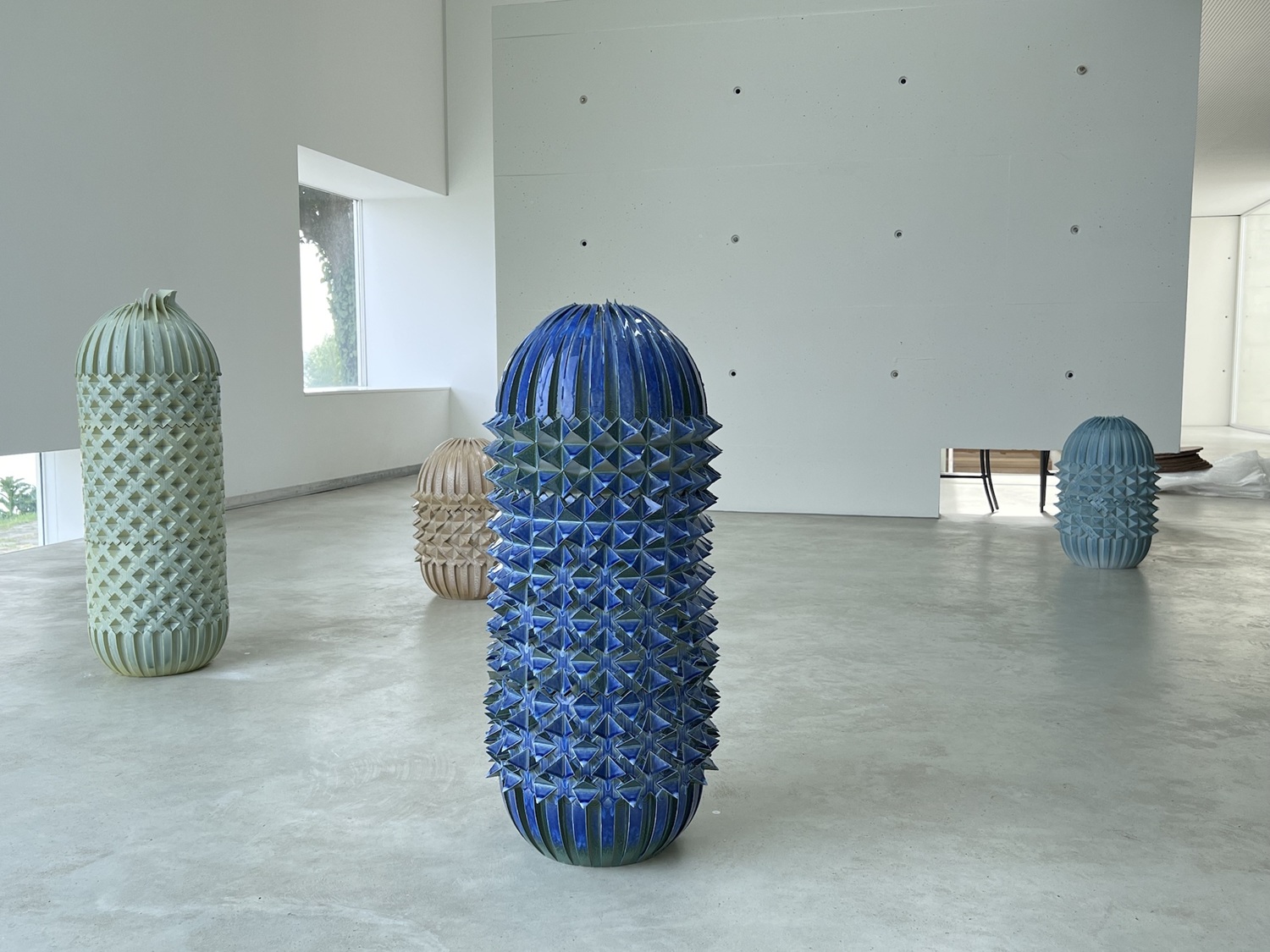
Joris Link is a Netherlands-based ceramic artist known for his refined craftsmanship and contemporary approach to slipcasting porcelain. Joris’ work blends traditional and modern techniques, creating sculptural pieces that emphasize texture, balance, and subtle detail. Through experimentation and precision, Joris explores form, material, and the quiet beauty of ceramics. The resulting works are in constant dialogue with the moulds that gave them their shape.


Clay Call
 Lets hear from YOU! Click HERE.
SPONSORS
 You can help support the show!
 GRPotteryForms.com


Number 1 brand in America for a reason. Skutt.com

For all your ceramic needs go to Georgies.com

Your works very technical in the way that you’re making your geometric shapes for your pieces. So even, even though there’s a lot of technical expertise that’s going into the work, do you have a story or a message that you want to communicate with your work?
That’s always a difficult question. I’m just fascinated by the process itself. So the I think the process and partly the technical details is what inspires me to make the pieces. I see it almost like puzzles. So I think of a certain shape or a different issue in ceramics, and I want to try to solve it for myself.

What do you want your what do you want people who see your work or experience your work? What do you want them to feel?
Probably just fascination, like I do myself. I always think if work is interesting for myself, then I’m guessing it must be interesting for somebody else too. Maybe not for everybody, but I’m working on my work so much. I’m spending so much time working it. If it keeps interesting for me, then I’m sure it will be interesting for a few other people as well.

You mentioned about a piece has to be interesting and captivating. How do you know when the form is right and ready for casting?
I’m never sure. I only know it when I take the first cast out, because I work from the negative shape. I never know exactly what’s going to happen.

Have you found that your brain has been able to adjust to see the the positive with the negative?
Yes, for the most part, yeah. It still surprises me, but I do have a quite good understanding of what’s possible.

Iin the making of the master, what details are you paying most close attention to in refining a master?
Yeah, I have some unwritten rules for myself when I make a mold. So I divide the shape in sometimes 1000s of parts, but I want the individual mold parts to have a certain esthetic as well. It’s difficult to describe because I have never written down my rules, but it’s from something I feel. So when I start thinking about the new shape and sometimes think, okay, I want to have this resolved, but it doesn’t feel right. It doesn’t feel that it matches my unwritten rules. And like we said before, I want to keep every details of the process in the end result as well. So you need a hole in the mold to get the clay in and out again. Those things are usually just also visible in the end result.
Early on in our conversation, you said you can almost make anything. I’m curious about the “almost” part… What’s the limitation of slip casting that you would like to get beyond”?
Well, a limitation is that the mold needs to be able to stand up by itself. Of course, you can use straps and things to keep them together. But few years ago, I made molds from an orb-flat shape, and the bottom part of the mold, it needs support to keep it up. So the structure of the mold can be a difficult thing if you’re working with shapes other than just a cylinder. And usually there are solutions that could be done in an easier way.


Book

The Ceramic Process by Anton Reijnders
Contact
Instagram: @joris_link